The SS Calvin Victory
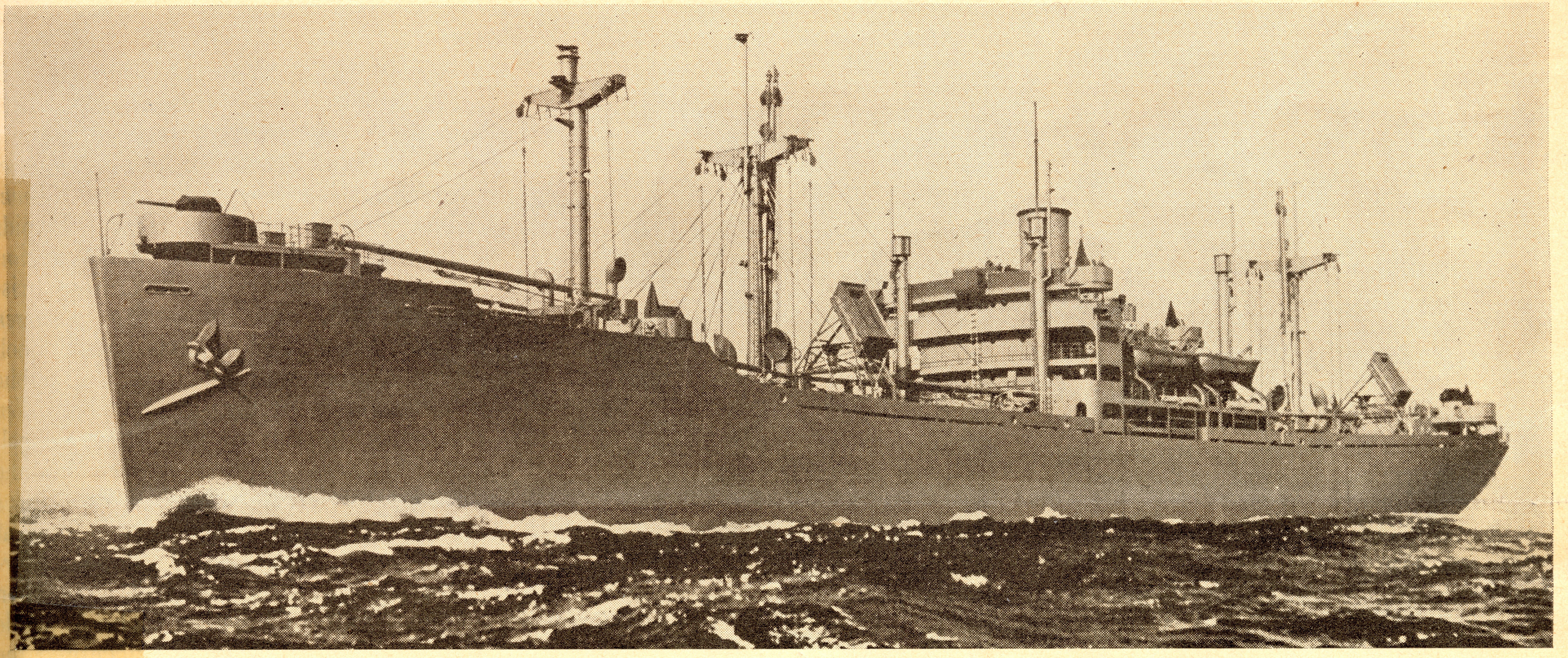
Last year, Dr. Katerberg wrote a post about the other Calvin Colleges (fictional and real). Another fun “Calvin” fact is that the University shares its name with a World War II era ship.
During the war, the US government commissioned hundreds of Liberty class ships. They were cheap and easy to build, and they could transport thousands of tons of supplies to allies and battlefronts in the Atlantic and Pacific theaters. In 1942 the War Shipping Administration commissioned a new type of vessel, one that improved upon the Liberty ship design; it would come to be known as the Victory ship.
Victory ships were slightly larger and significantly faster than their predecessors, featuring stronger hulls and more powerful oil-fired steam turbine engines. The first of these ships, SS United Victory, entered service in February 1944. The Navy named the first 35 ships after the allied nations. It then named the rest of the 441 Victory ships after American towns and colleges.

Five of these ships took the names of members of the Michigan Intercollegiate Athletic Association: SS Alma Victory, SS Albion Victory, SS Hillsdale Victory, SS Hope Victory, and, of course, SS Calvin Victory.
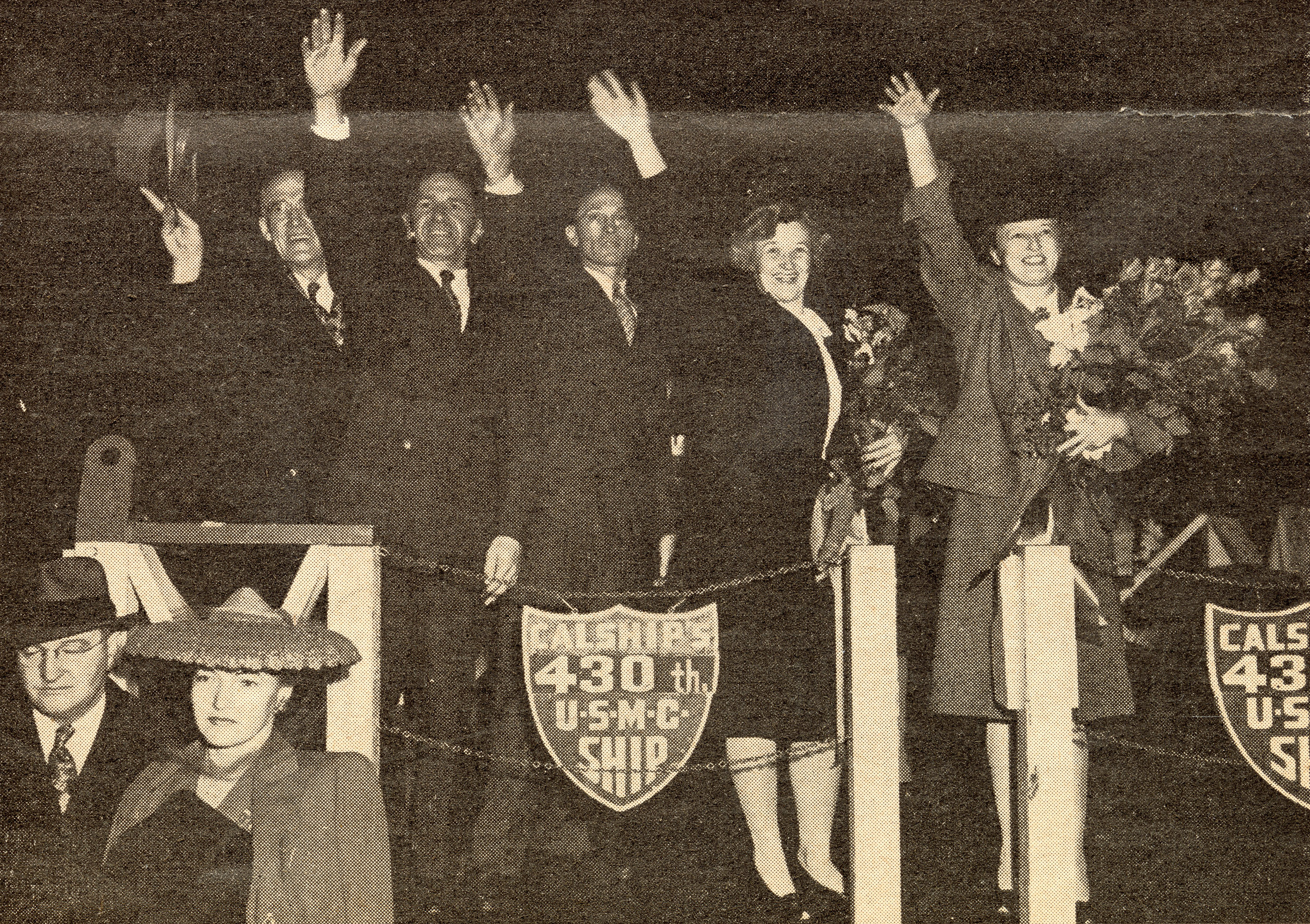
Construction began on Calvin Victory on February 13, 1944, at the California Shipbuilding Corporation’s yard on Terminal Island near Los Angeles. By April 5, a Wednesday, it was ready to launch.
The day before, in the afternoon, Calvin alumni and friends in the area gathered at Second Christian Reformed Church in Bellflower where they had coffee and collected funds to contribute to the ship’s library. They then left for Terminal Island, arriving around 1:00 AM Wednesday morning. There they once again had coffee at a brief reception hosted by the company before ceremonies began at 1:45.
Rev. Frank De Jong gave a speech dedicating the new vessel. “Our beloved Alma Mater has ever taught her sons and daughters that the relation of God to His sinful creatures is restored alone through grace,” he noted, “a grace that gives man VICTORY THROUGH CHRIST.” The name Calvin Victory was most fitting for this reason. He concluded by emphasizing that he hoped the ship would make it through the perils of war and “in years to come” help “to establish the policy of ‘Good Neighbor’ among the nations of the world.”
Rev. Sebastian Struyk then lifted his voice to God, praying that “In times of war may [Calvin Victory’s] cargo aid in the destruction of evil; and in times of peace may it contribute to the welfare of man.” After the prayer at 2:00 AM sharp Calvin Victory was christened and launched.
Little is known about Calvin Victory’s wartime service. Axis forces destroyed or damaged only a handful of Victory ships as the Allies had almost full control of the seas by the middle of 1944.
After the war, shipping companies converted many Victory ships to civilian use; the U.S. navy maintained some to return to service if needed. The Dutch government transformed the former troop transport SS Costa Rica Victory into an emigrant passenger ship, for example, after buying it from the United States in 1947. The newly renamed Groote Beer made frequent voyages between the Netherlands and Halifax, Nova Scotia carrying thousands of Dutch immigrants to Canada.
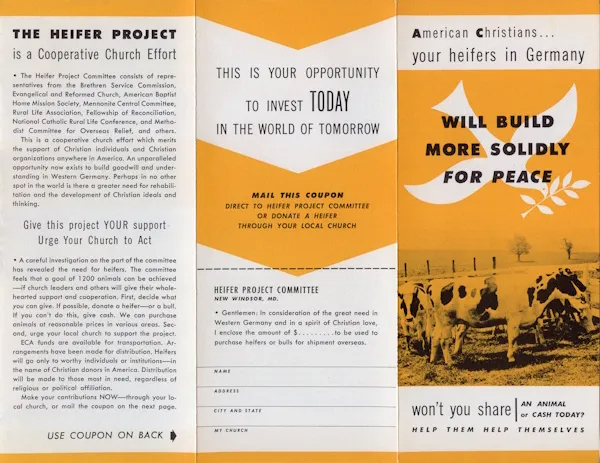
Many other ships found new purpose serving humanitarian causes. Millions of people across the world were in desperate need of food and support. To ameliorate this need, an Anabaptist denomination, the Church of the Brethren, partnered with the United Nations Relief and Rehabilitation Administration (UNRRA) on a “Heifer Project.”
The goal of the project was to transport cattle donated by willing farmers to people in need across the globe. To quickly achieve this goal, the UNRRA acquired forty-six Victory ships and several other vessels and converted them into livestock transports. The sailors who manned the ships on these humanitarian missions were called the “Seagoing Cowboys.” The delivered livestock to both former allies and former enemies such as Germany.
Calvin Victory was one of the ships used by the Seagoing Cowboys, and it made a total of five relief missions in 1946-1947. The ship delivered thousands of cattle from the United States to the people of Greece and Poland.
On a journey to Greece in 1946, Norman Matthews, a journalist from the Mississippi-Tennessee based Commercial Appeal, accompanied the ship’s largely Mississippian crew on their relief mission. He reported “bombed houses and stores in the background [and] destroyed piers and warehouses in the foreground.” Greek officials and people celebrated the arrival of Calvin Victory and her crew and cargo. When the ship returned to Mississippi the crew presented the governor with a letter of gratitude on behalf of the people of Greece.
After the conclusion of the UNRRA mission to Europe, Calvin Victory was renamed Columbia Heights and continued delivering livestock now to the Near East until it was retired.
Calvin Victory’s post-war career was the fulfillment of the hopes of Revs. De Jong and Struyk that it would promote human welfare across the world.
***********
Matt Vander Wall is a history major at Calvin University and an archives assistant in Heritage Hall.