A New History of Calvin (with a sample from the book)
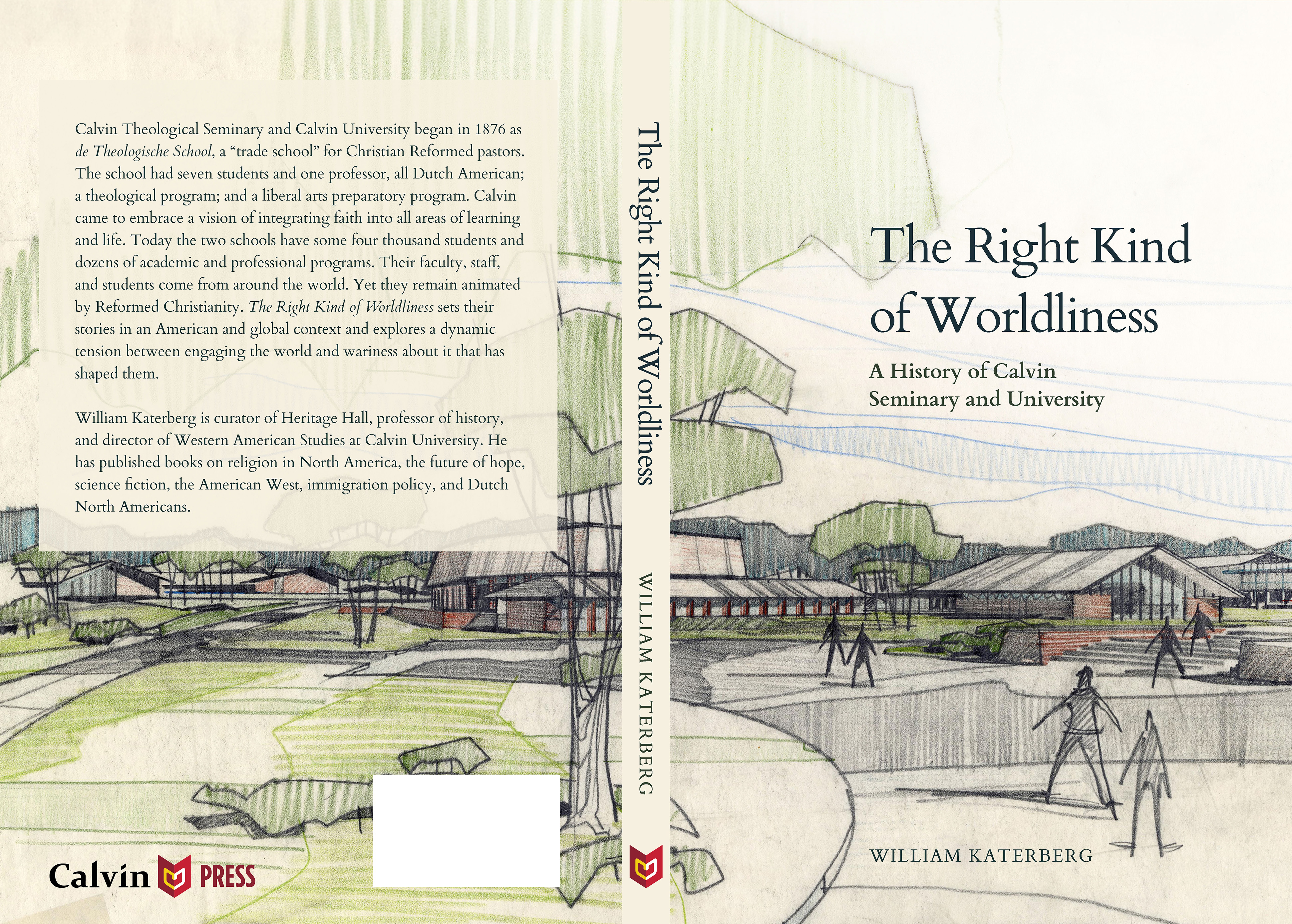
The little “trade school” for pastors founded by the Christian Reformed Church (CRC) in 1876 has evolved into Calvin Theological Seminary and Calvin University. Every twenty-five years, starting with its fiftieth anniversary in 1926, Calvin has retold its story.
In 1901, the Theological School and its new preparatory department (think academy or high school) celebrated their first twenty-five years by paying off the mortgage on their Madison Avenue campus. In 1906 John Calvin Junior College welcomed its first students. And in 1920 Calvin College became a four-year baccalaureate school. In 1926, the two schools started an anniversary tradition, telling their story in a book. The Semi-Centennial Volume: Theological School and Calvin College, 1876-1926 was 300 pages long. It had chapters in English and Dutch written by school faculty and Christian Reformed leaders who envisioned a future in which the college had become a university that shaped American life. The Theological School had been informally called “Calvin Seminary” for some time. For the 1930-1931 academic year, they made that official, renaming the two schools “Calvin College and Seminary.”
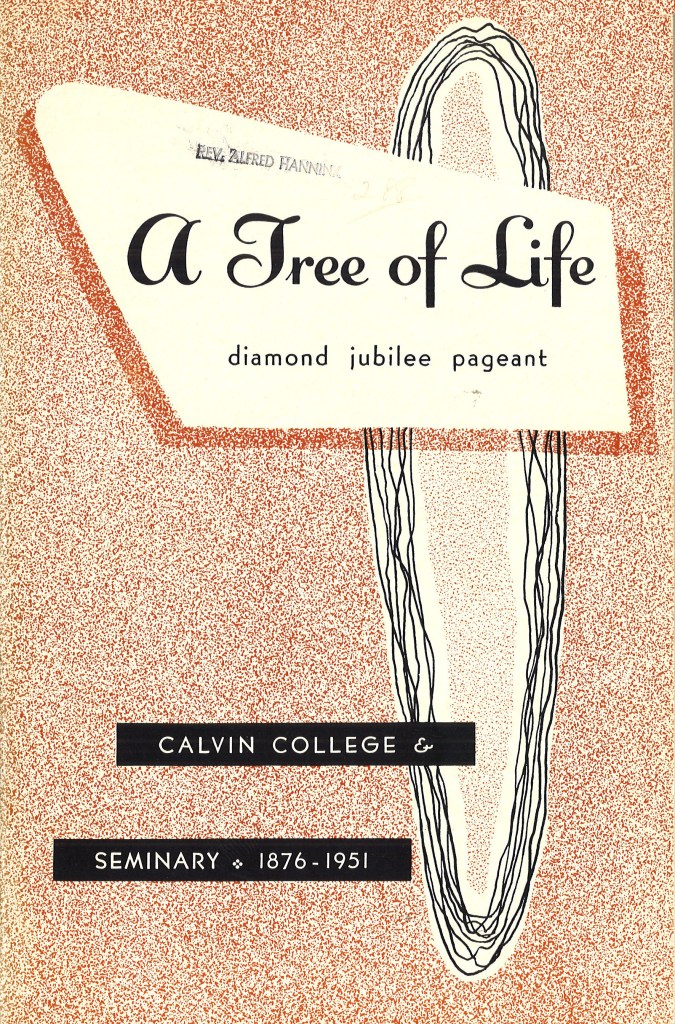
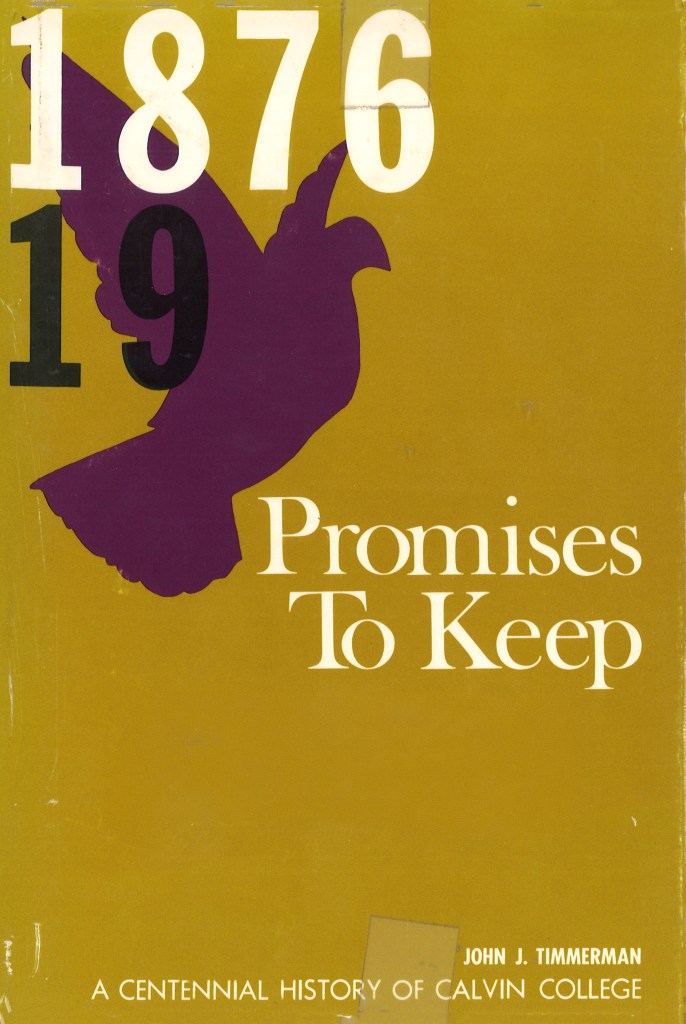
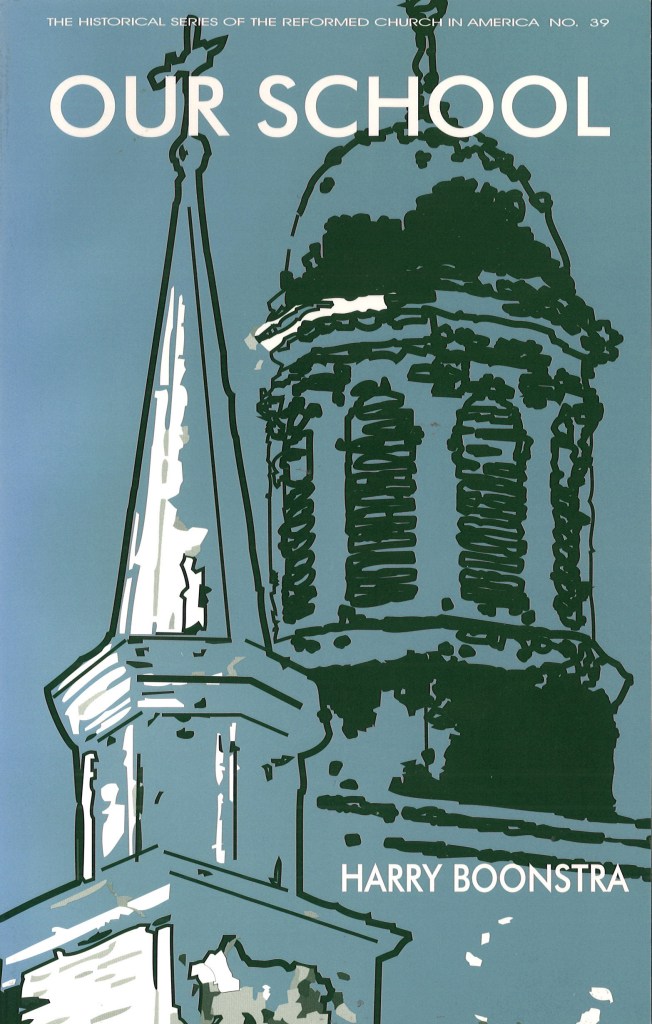
Roughly once a generation since then, to mark major anniversaries, someone has written a new “Calvin” history. In 1951, in a creative break, English professor Henry Zylstra wrote Tree of Life: A Pageant Depicting in Word and Symbol the History of Calvin College and Seminary on the occasion of her Diamond Jubilee. A lineup of stalwarts from Calvin and the Christian Reformed Church performed the pageant twice at the Grand Rapids Civic Auditorium, on March 20 and 21. In 1975, another English professor, John Timmerman, published Promises to Keep: A Centennial History of Calvin College. And in 2001 Harry Boonstra published Our School: Calvin College and the Christian Reformed Church. These retellings reflect the circumstances of Calvin in in and for that generation.
My new book, The Right Kind of Worldliness: A History of Calvin Seminary and University, follows this tradition. I hope to be healthy and hale enough to see the next retelling in 2051. Perhaps it will be another pageant. Hopefully 2051 will be a time of growth and optimism, as was the case in 1926, 1951, 1976, and 2001.1 2026 has been different. “There [has been] much to celebrate,” I emphasize in the epilogue to my book. “Both the Seminary and University were reaching global audiences and their programs and Reformed approaches to education were attracting more diverse student bodies than ever before.” But Calvin faced challenges shaped by tight budgets, declining numbers of American college students, pressures to make higher education about well-paying jobs, and “culture war” conflicts with cultural, religious and political elements. The very challenges “faced by the university and seminary” and “American higher education generally,” however, made their visions of integrative Christian and liberal arts learning all the more relevant.
The central theme in the book is, as the title indicates, “the right kind of worldliness.” The two schools are named after the sixteenth century reformer, John Calvin. But their “patron saint,” I suggest, is Abraham Kuyper, the Dutch pastor, university founder, newspaper editorialist, and politician. He “famously said, ‘There is not a square inch in the whole domain of our human existence over which Christ, who is Sovereign overall, does not cry, Mine!’ Kuyper was wary enough of the world—despite his triumphal ‘Mine!’—that he talked about an “antithesis” between believers (the church) and unbelievers (the world). Yet he was confident enough to insist that Christian should participate in all spheres of life in the world, collaborating with others and bringing a Reformed witness to every ‘square inch.'”
“This mix of confidence and wariness about engaging the world,” I show, “inspired a creative tension that has shaped how the two schools understand and enact their mission as Reformed Christian institutions of higher education. ‘Worldly’ can mean materialistic, carnal, profane, and secular. And it can mean engaged, involved, wise, knowledgeable, and discerning. Put simply, one way of understanding Calvin’s history is that it has been about finding the right kind of worldliness.”
A good example of this tension is the movie going. In 1928 the CRC prohibited movie going and two other forms of “worldliness,” dancing and card playing, and fired a seminary professor for repeatedly going to movies, despite warnings to stop. It similarly tried to punish students, but generally failed to stop them. In the 1960s, with more and more CRC folk going to movies and watching TV, the church changed its stance. It withdrew its prohibition and asked Calvin College to create a film a film program that would help Christians discern good films from corrupt ones and would train students in film production so that they could be salt and light in this area of life too.
Along the way, in addition to this central theme, my book has a variety of persistent sub-plots. These include the changing roles of women at Calvin, the transition from a “Dutch” Calvin to ethnically and racially diverse schools with people from around the world, the effort to practice a distinct Reformed approach to learning, and Calvin’s place in American higher education. The book also includes a chapter on Reformed education from the 1500s to the 1800s by Karin Maag of the Meeter Center at Calvin. My hope is that my recounting of Calvin’s history will help readers better understand the challenges and opportunities of the present and near future.
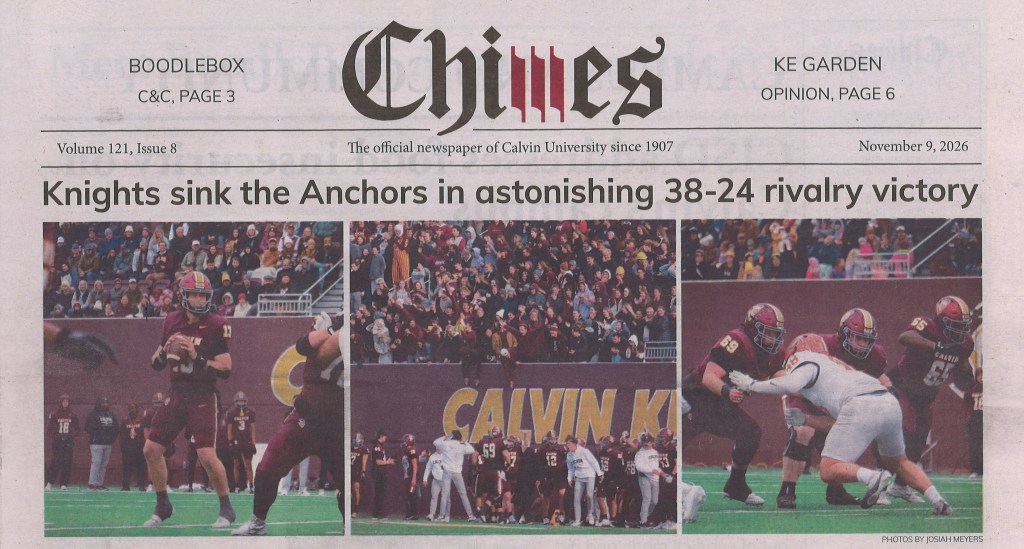
There’s fun stuff in the book too. Student life and hijinks. Sports! Definitely sports, which seems especially appropriate the week after Calvin University’s football team beat Hope College’s team. This may be the new rivalry. The historic rivalry–basketball–is a century old and arguably the most storied one in NCAA Division III sports. That rivalry has been written up by ESPN, Sports Illustrated, and the New York Times. This weekend, Yahoo Sports reposted a story on Calvin’s big win from the Holland Sentinel. Click on the photo (above) for the online version of the Chimes story.
Here is a PDF of the preface to my book, published by The Calvin Press. I hope this taste of the book leaves you wanting more. You can find my book in eBook format (Amazon Kindle, Kobo, Apple Books, Bookshop.org) and in print at the usual kinds of places: the Calvin University Campus Store, Shuler Books, Bookshop.org (which works with local stores) and Amazon, for example.
***
William Katerberg is a professor of history and curator of Heritage Hall at Calvin University.
- In 1951 and 1952, the Seminary was mired in conflicts among the faculty, ones that would lead to six of the seven faculty being retired, fired, or not rehired by the Synod of the Christian Reformed Church in 1952, and the remaining one reprimanded. ↩︎